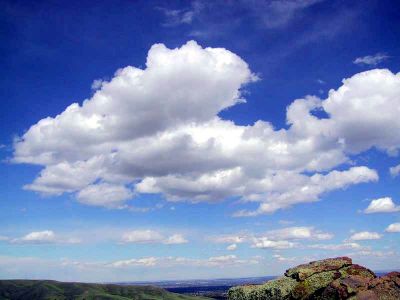
Geology (from the Ancient Greek γῆ, gē, i.e. "earth" and -λoγία, -logia, i.e. "study of, discourse") is an earth science concerned with the solid Earth, the rocks of which it is composed, and the processes by which they change over time. Geology can also refer to the study of the solid features of any terrestrial planet or natural satellite, (such as Mars or the Moon).
Andrew Herbert Knoll. Gaidos E, Knoll AH. Frontiers of Astrobiology. Cambridge: Cambridge University Press; 2012. Our evolving planet: From dark ages to evolutionary renaissance. pp. 132–153.
Josiah Gilbert Holland, in Rev. S. Pollock Linn Golden Gleams of Thought from the Words of Leading Orators, Divines, Philosophers, Statesmen and Poets, A.C. McClurg & Company, 1881, p. 280.
From air quality to solar radiation, information on our atmosphere is of crucial importance to us all. In order to make the right decisions for our current and future quality of life, European decision makers, businesses and citizens need reliable and up-to-date information on exactly what is going on in our atmosphere now and what to expect in the future.


 EN
EN 
 CS
CS DE
DE ES
ES FR
FR HU
HU IT
IT PL
PL PT
PT РУ
РУ SK
SK TR
TR УК
УК AR
AR 中文
中文