Safety is the state of being "safe" (from French sauf), the condition of being protected from harm or other non-desirable outcomes. Safety can also refer to the control of recognized hazards in order to achieve an acceptable level of risk.
Now, it is true that the nature of society is to create, among its citizens, an illusion of safety; but it is also absolutely true that the safety is always necessarily an illusion. Artists are here to disturb the peace.
James Baldwin "An interview with James Baldwin" (1961)
A man wants no protection when his conduct is strictly right.
William Murray, 1st Earl of Mansfield, Bird v. Gunston (1785), 3 Doug. 275; reported in James William Norton-Kyshe, Dictionary of Legal Quotations (1904), p. 212.
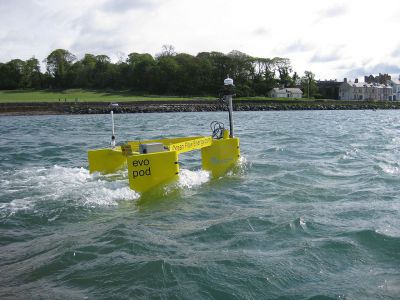
Depletion and the negative environmental impact of fossil fuels are the main drivers behind the quest for renewable energy technologies. EU-funded scientists studied the potential of newly developed prototype devices to exploit geophysical flows.


 EN
EN 
 CS
CS DE
DE ES
ES FR
FR HU
HU IT
IT PL
PL PT
PT РУ
РУ SK
SK TR
TR УК
УК AR
AR 中文
中文