Zürich, Switzerland

Science and Policy ()

Table of contents

Science and Policy () at UZH

Language: English Studies in English
University website: www.uzh.ch
Type: PhD/Doctoral programme
Academic degree: Doctor of Philosophy (PhD)
Credits: 12 ECTS
;

Definitions and quotes

Policy
A policy is a deliberate system of principles to guide decisions and achieve rational outcomes. A policy is a statement of intent, and is implemented as a procedure or protocol. Policies are generally adopted by a governance body within an organization. Policies can assist in both subjective and objective decision making. Policies to assist in subjective decision making usually assist senior management with decisions that must be based on the relative merits of a number of factors, and as a result are often hard to test objectively, e.g. work-life balance policy. In contrast policies to assist in objective decision making are usually operational in nature and can be objectively tested, e.g. password policy.
Science
Science (from Latin scientia, meaning "knowledge") is a systematic enterprise that builds and organizes knowledge in the form of testable explanations and predictions about the universe.
Policy
Don't throw a monkey-wrench into the machinery.
Philander Chase Johnson, Everybody's Magazine (May 1920), p. 36.
Science
The objective world of science has nothing in common with the world of things-in-themselves of the metaphysician. The metaphysical world, assuming that it has any meaning at all, is irrelevant to science.
A. D'Abro, The Evolution of Scientific Thought from Newton to Einstein (1927) footnote, p. 152.
Science
We say that the string is 'random' if there is no other representation of the string which is shorter than itself. But we will say that it is 'non-random' if there does exist such an abbreviated representation. ... In general, the shorter the possible representation... the less random... On this view we recognize science to be the search for algorithmic compressions. ... It is simplest to think of mathematics as the catalogue of all possible patterns. ... When viewed in this way, it is inevitable that the world is described by mathematics. ...In many ways the search for a Theory of Everything is a manifestation of a faith that this compression goes all the way down to the bedrock of reality...
John D. Barrow, New Theories of Everything (2007).
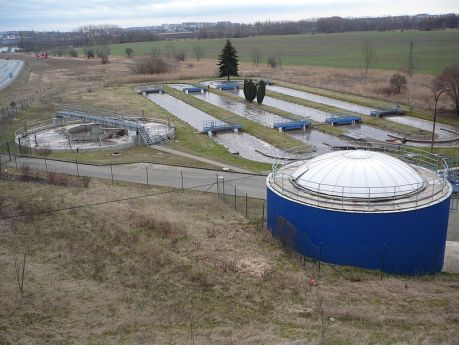
Wastewater treatment plants (WWTPs) must handle large amounts of data from different sources and of varied quality, making it difficult for operators to identify the plant's status. An EU initiative addressed this problem by enabling all available data to be successfully managed.
Privacy Policy