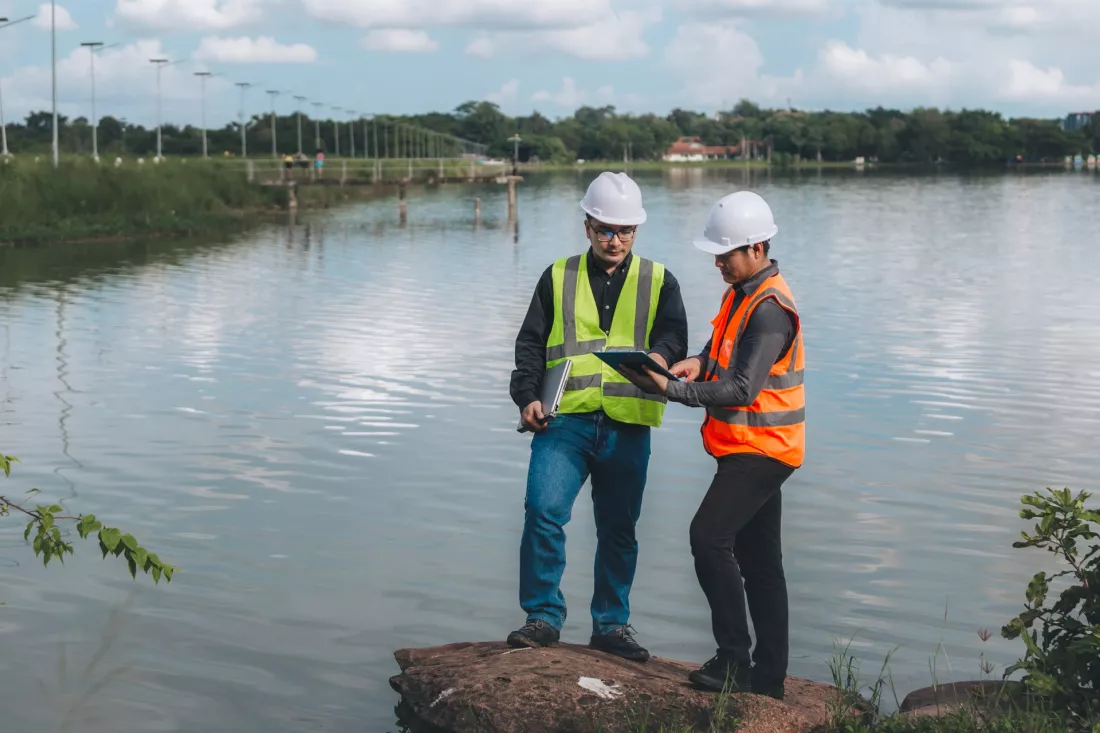
Civil Engineering
Civil engineering is a professional engineering discipline that deals with the design, construction, and maintenance of the physical and naturally built environment, including works such as roads, bridges, canals, dams, airports, sewerage systems, pipelines, and railways. Civil engineering is traditionally broken into a number of sub-disciplines. It is the second-oldest engineering discipline after military engineering, and it is defined to distinguish non-military engineering from military engineering. Civil engineering takes place in the public sector from municipal through to national governments, and in the private sector from individual homeowners through to international companies.
Engineering
Engineering is the creative application of science, mathematical methods, and empirical evidence to the innovation, design, construction, operation and maintenance of structures, machines, materials, devices, systems, processes, and organizations. The discipline of engineering encompasses a broad range of more specialized fields of engineering, each with a more specific emphasis on particular areas of applied mathematics, applied science, and types of application. See glossary of engineering.
Transport
Transport or transportation is the movement of humans, animals and goods from one location to another. Modes of transport include air, land (rail and road), water, cable, pipeline and space. The field can be divided into infrastructure, vehicles and operations. Transport is important because it enables trade between people, which is essential for the development of civilizations.
Civil Engineering
Mechanical differs from Civil Engineering in the fact that the former provides or makes what the latter uses. On this account, a knowledge of mechanical engineering is of invaluable service to the civil engineer, and it should be the rule to obtain this practically, whatever branch of engineering the student may ultimately follow.
Frederick Dye (1895) Popular engineering: being interesting and instructive examples in civil, mechanical, electrical, chemical, mining, military and naval engineering graphically and plainly described...". p. 212
Civil Engineering
Mechanical engineering is now the largest branch, with nearly 40 percent of the profession's members. Civil engineering, which was the largest branch prior to World War II, has dropped to second place, with about 25 percent of all engineers.
United States. Bureau of Labor Statistics (1951) Effect of defense program on employment outlook in engineering. p. 18
Civil Engineering
There is nothing in machinery, there is nothing in embankments and railways and iron bridges and engineering devices to oblige them to be ugly. Ugliness is the measure of imperfection.
H. G. Wells (2012), in Gaither's Dictionary of Scientific Quotations: A Collection of Approximatel, p. 1201