Szczecin, Poland

Socio-Economic Geography and Spatial Management

Geografia społeczno-ekonomiczna i gospodarka przestrzenna

Table of contents
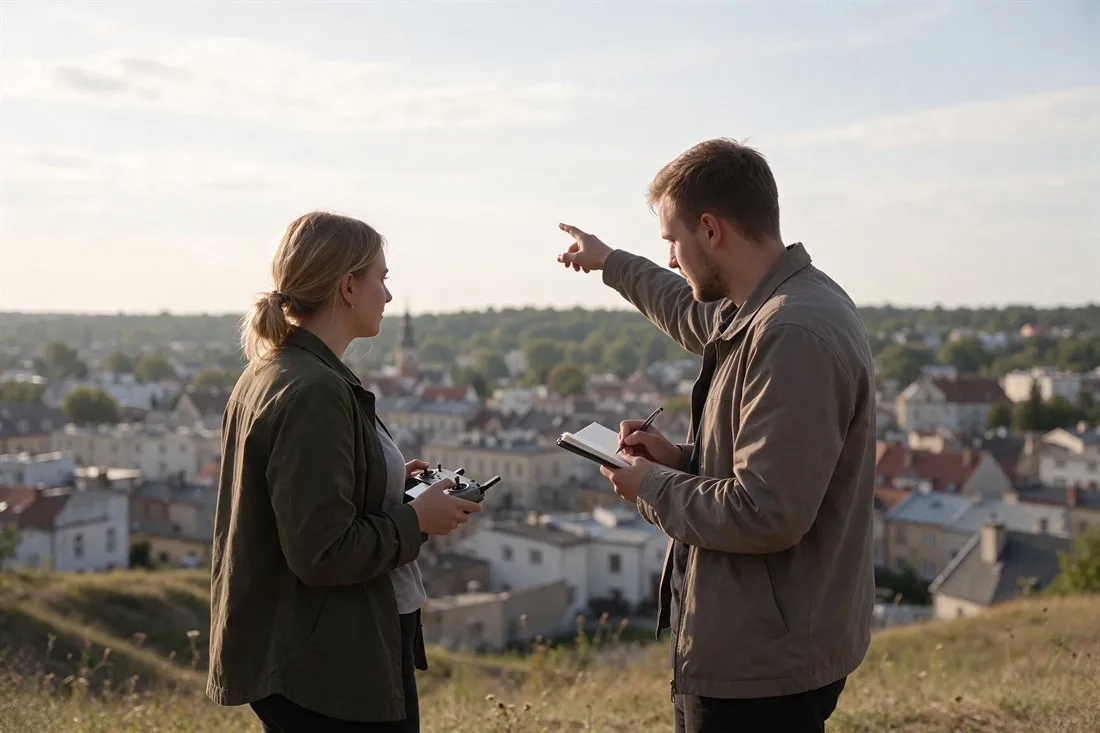
Kobieta z dronem i mężczyzna z notesem na wzgórzu

⇑Socio-Economic Geography and Spatial Management at US

Language: Polish Studies in Polish
Subject area: physical science, environment
University website: usz.edu.pl/en/english

⇑Test: czy szkoła doktorska w dyscyplinie „Geografia społeczno-ekonomiczna i gospodarka przestrzenna” to dobra droga dla Ciebie?

Kobieta z dronem i mężczyzna z notesem na wzgórzu

10 pytań · dwie minuty

1. Rozprawa wymaga jednego pytania o to, jak ludzie i gospodarka układają się w przestrzeni. Masz takie pytanie?

2. Promotor wyznacza kierunek, a badania terenowe i analizy planujesz samodzielnie. Jak to widzisz?

3. Wyniki trzeba opisać w artykule, zwykle po angielsku, i przedstawić na konferencji. Co o tym myślisz?

4. Recenzent uważa, że dobór wskaźników w Twojej analizie jest nietrafny. Co robisz?

5. Doktorant prowadzi też ćwiczenia ze studentami, na przykład z analizy danych przestrzennych. Jak do tego podchodzisz?

6. Do badania zmian w miastach potrzebne są dane statystyczne, które bywają niespójne między latami. Co robisz?

7. Badanie wymaga rozmów z mieszkańcami i przedsiębiorcami w terenie. Jak się do tego odnosisz?

8. Mapa pokazuje związek między dostępnością komunikacyjną a rozwojem gospodarczym. Co o tym sądzisz?

9. Wyniki badań mogą posłużyć samorządom do decyzji o rozwoju terenu. Jak podchodzisz do takiego zastosowania?

10. Analiza przestrzenna wymaga narzędzi do pracy z danymi geograficznymi i metod statystycznych. Jak z tym stoisz?

⇑Definitions and quotes

Geography
Geography (from Greek γεωγραφία, geographia, literally "earth description") is a field of science devoted to the study of the lands, the features, the inhabitants, and the phenomena of Earth. The first person to use the word "γεωγραφία" was Eratosthenes (276–194 BC). Geography is an all-encompassing discipline that seeks an understanding of the Earth and its human and natural complexities—not merely where objects are, but how they have changed and come to be.
Management
Management (or managing) is the administration of an organization, whether it is a business, a not-for-profit organization, or government body. Management includes the activities of setting the strategy of an organization and coordinating the efforts of its employees (or of volunteers) to accomplish its objectives through the application of available resources, such as financial, natural, technological, and human resources. The term "management" may also refer to those people who manage an organization.
Geography
Geography is just physics slowed down, with a couple of trees stuck in it.
Terry Pratchett in The Last Continent.
Management
Poorly managed corporations, disorganized businesses, and badly led service agencies experience crisis daily and most will eventually fail. In contrast, the danger is to well organized, smooth running institutions that may not recognize a building crisis. Too often, sound organizations rely on their normal modus operandi to pull them through a crisis. It might. But at what cost? And what if it does not pull them through?
Wheeler L. Baker, Crisis Management: A Model for Managers (1993), p. 6
Management
Management as an activity has always existed to make people’s desires through organized effort. Management facilitates the efforts of people in organized groups and arises when people seek to cooperate to achieve goals.
Daniel A. Wren and Arthur G. Bedeian. The evolution of management thought, 1972, p. 11-12
StudentNews Group Websites for students and future students — in Poland since 2007, across Europe since 2014. Over 50 websites and millions of users a year (Google Analytics). Studies in Europe Universities in Europe Bachelor’s Master’s Doctorate MBA Study guide Work abroad Travel For partners Advertising and cooperation Reach (online report) Contact advertising@studentnews.eu © 2003–2026 Grupa StudentNews.pl sp. z o.o., Modlnica, Poland
Privacy Policy