Gdańsk, Poland

Civil Engineering, Geodesy, and Transport

Inżynieria lądowa, geodezja i transport

Table of contents
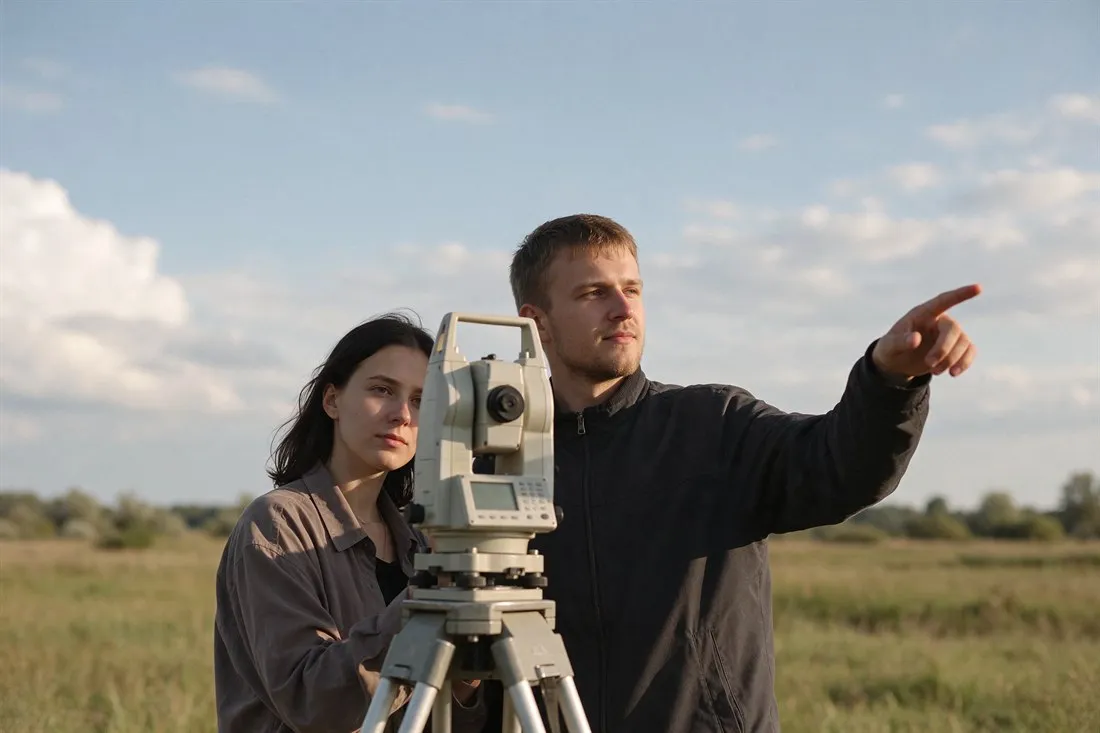
Kobieta i mężczyzna ustawiają przyrząd pomiarowy na statywie w terenie

⇑Civil Engineering, Geodesy, and Transport at Instytut Maszyn Przepływowych im. Roberta Szewalskiego Polskiej Akademii Nauk

Language: Polish Studies in Polish
Subject area: engineering and engineering trades
Institution website: www.imp.gda.pl/en/

⇑Test: czy szkoła doktorska w dyscyplinie „Inżynieria lądowa, geodezja i transport” to dobra droga dla Ciebie?

Kobieta i mężczyzna ustawiają przyrząd pomiarowy na statywie w terenie

10 pytań · dwie minuty

1. Doktorat z inżynierii lądowej, geodezji lub transportu to lata pracy nad jednym zagadnieniem, na przykład konstrukcją, pomiarem albo ruchem. Jak to widzisz?

2. Badania w terenie i w laboratorium wymagają planu, którego pilnujesz samodzielnie. Jak to oceniasz?

3. Wyniki pomiarów i obliczeń trzeba opisać w publikacji, zwykle po angielsku. Jak się z tym czujesz?

4. Recenzent zauważa, że Twój model obliczeniowy nie został sprawdzony pomiarami. Co robisz?

5. Doktoranci prowadzą ze studentami ćwiczenia projektowe i pomiarowe. Jak to oceniasz?

6. Pomiar w terenie jest zakłócony przez pogodę lub ruch. Co robisz?

7. Badasz zachowanie materiału lub konstrukcji pod obciążeniem. Jak zapewniasz wiarygodność wyniku?

8. Do analizy ruchu lub przestrzeni potrzebujesz dużych zbiorów danych pomiarowych. Jak do tego podchodzisz?

9. Twoje wnioski mogą wpłynąć na bezpieczeństwo konstrukcji lub ludzi w ruchu. Jak to traktujesz?

10. Przydałaby się współpraca z geologiem, informatykiem lub inżynierem ruchu, a w zespole nikogo takiego nie ma. Co robisz?

⇑Definitions and quotes

Civil Engineering
Civil engineering is a professional engineering discipline that deals with the design, construction, and maintenance of the physical and naturally built environment, including works such as roads, bridges, canals, dams, airports, sewerage systems, pipelines, and railways. Civil engineering is traditionally broken into a number of sub-disciplines. It is the second-oldest engineering discipline after military engineering, and it is defined to distinguish non-military engineering from military engineering. Civil engineering takes place in the public sector from municipal through to national governments, and in the private sector from individual homeowners through to international companies.
Engineering
Engineering is the creative application of science, mathematical methods, and empirical evidence to the innovation, design, construction, operation and maintenance of structures, machines, materials, devices, systems, processes, and organizations. The discipline of engineering encompasses a broad range of more specialized fields of engineering, each with a more specific emphasis on particular areas of applied mathematics, applied science, and types of application. See glossary of engineering.
Transport
Transport or transportation is the movement of humans, animals and goods from one location to another. Modes of transport include air, land (rail and road), water, cable, pipeline and space. The field can be divided into infrastructure, vehicles and operations. Transport is important because it enables trade between people, which is essential for the development of civilizations.
Engineering
Engineering is the conscious application of science to the problem of economic production.
Halbert Powers Gillette (1910). cited in: T.J. Hoover & J.C. Lounsbury Fish. The Engineering Profession. Stanford University Press, 1941. p. 463
Civil Engineering
Bhakra Nangal Project is something tremendous, something stupendous, something which shakes you up when you see it. Bhakra, the new temple of resurgent India, is the symbol of India’s progress.
Pt. Nehru at the dedication ceremony of the dam to the nation on 22nd October 1963. In Developmental History of Bhakra – Nangal Dam Project
Engineering
These experiences are not 'religious' in the ordinary sense. They are natural, and can be studied naturally. They are not 'ineffable' in the sense the sense of incommunicable by language. Maslow also came to believe that they are far commoner than one might expect, that many people tend to suppress them, to ignore them, and certain people seem actually afraid of them, as if they were somehow feminine, illogical, dangerous. 'One sees such attitudes more often in engineers, in mathematicians, in analytic philosophers, in book keepers and accountants, and generally in obsessional people'.
The peak experience tends to be a kind of bubbling-over of delight, a moment of pure happiness. 'For instance, a young mother scurrying around her kitchen and getting breakfast for her husband and young children. The sun was streaming in, the children clean and nicely dressed, were chattering as they ate. The husband was casually playing with the children: but as she looked at them she was suddenly so overwhelmed with their beauty and her great love for them, and her feeling of good fortune, that she went into a peak experience . . .
Colin Wilson in New Pathways In Psychology, p. 17
StudentNews Group Websites for students and future students — in Poland since 2007, across Europe since 2014. Over 50 websites and millions of users a year (Google Analytics). Studies in Europe Universities in Europe Bachelor’s Master’s Doctorate MBA Study guide Work abroad Travel For partners Advertising and cooperation Reach (online report) Contact advertising@studentnews.eu © 2003–2026 Grupa StudentNews.pl sp. z o.o., Modlnica, Poland
Privacy Policy